
A Real Problem: Schools Without Power
Picture a small rural school in sub-Saharan Africa. Lessons stop once the sun goes down. Computers sit idle because there’s no reliable power. According to UNICEF, more than half of schools in countries like Zambia still operate without electricity. That means fewer learning hours, no access to digital tools, and limited opportunities for both teachers and students.
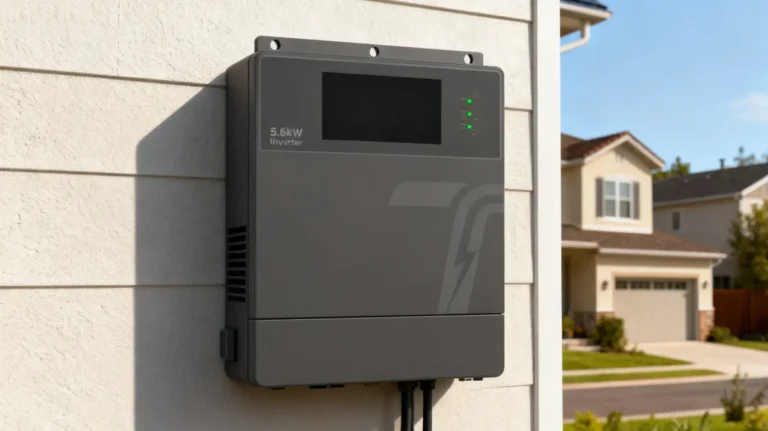
The question is simple: how do you give these schools dependable power without waiting decades for the national grid? The answer lies in compact renewable systems—specifically, stackable 5 kWh all-in-one units paired with solar panels.
Why 5 kWh Matters
A 5 kWh battery isn’t massive. Think of it as a bucket that can deliver about 400 watts steadily for 10 hours. For a school, that’s enough to cover lights, a projector, a handful of laptops, and internet access for a full teaching day—if you design the system smartly.
Here’s what a typical daily load might look like for two classrooms:
| Device | Power (W) | Hours/Day | Qty | Energy Use (Wh) |
|---|---|---|---|---|
| LED classroom lights | 80 | 6 | 2 rooms | 960 |
| Projector | 260 | 2 | 1 | 520 |
| Laptops | 50 | 2 | 10 | 1000 |
| Wi-Fi router + AP | 15 | 12 | 1 | 180 |
| Teacher’s desktop | 200 | 2 | 1 | 400 |
| Total | 3,060 Wh |
Add inverter losses and system overhead (roughly 20–25%), and you land near 3.8 kWh/day. A 5 kWh lithium battery, usable at ~80% depth of discharge, provides about 4 kWh—just enough with a little margin.
That’s why 5 kWh is a practical baseline: it fits a single school day’s core needs.
The Stackable Advantage
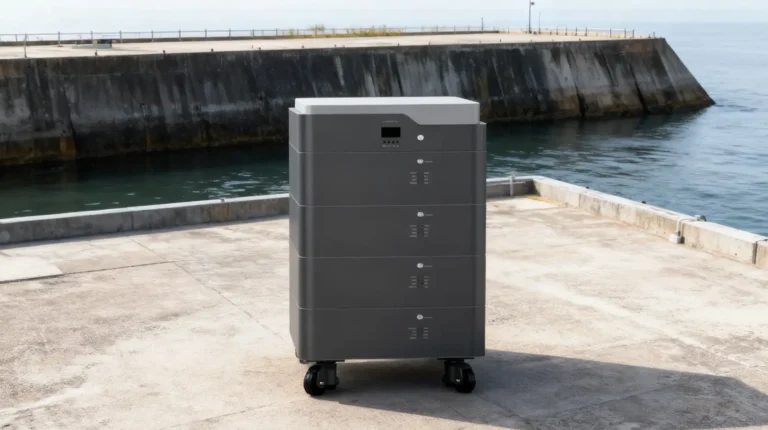
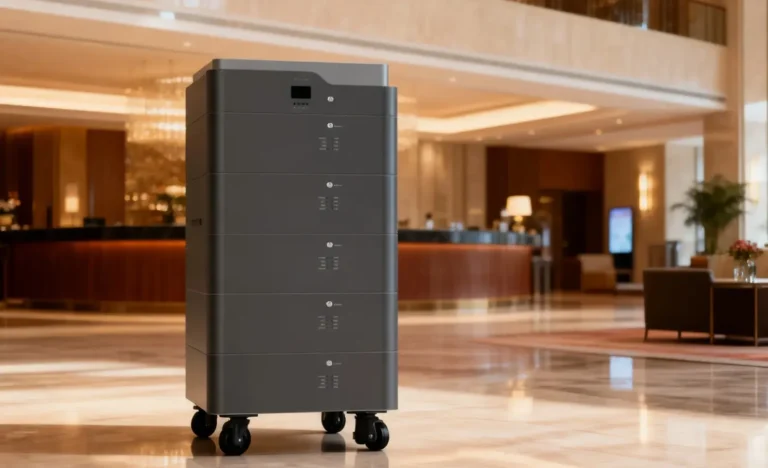
Many schools won’t stay small forever. Once you add evening classes, more laptops, or even refrigeration for science labs, demand climbs quickly. Stackable all-in-one systems solve this. Start with a single 5 kWh block, then expand to 10 kWh, 15 kWh, or beyond by stacking modules like building blocks.

Our 5kW 5kWh Stacked Home Solar Lithium Battery Backup Energy Storage System is designed for exactly this. Schools can begin with the essentials and add more capacity as budgets grow or donors step in. There’s no need to rip out the old system; you simply add another layer.
Pairing with Solar
Of course, batteries don’t generate power—they only store it. That’s where solar comes in. In much of Africa and Asia, average daily solar radiation ranges between 4–6 kWh/m². A modest 2 kWp solar array can generate 6–10 kWh on a clear day, more than enough to refill a 5 kWh battery.
Sizing rule of thumb: for every 5 kWh battery stack, install 1.8–2.5 kWp of panels. This balances daily loads, charging, and cloudy-day backup.
If schools want longer autonomy—say two days without sun—they can step up to a 10 kWh or 15 kWh stacked system.
Cost and Payback
Researchers in Kenya modeled school microgrids with solar and 5 kWh batteries. They found that a “5 kW solar + 5 kWh battery” setup often delivered the shortest payback—under three years when replacing diesel generators. Even second-life EV batteries cut costs further, lowering the levelized cost of energy by up to 35%.
For donors and NGOs, this matters: each dollar buys more classroom hours, more connected laptops, and more opportunities for students.
Safety First
Batteries in schools must follow strict standards. Install units in ventilated rooms, away from flammable materials. Use certified lithium iron phosphate (LiFePO4) packs that meet IEC 62619 for safety testing. Follow NFPA 855 guidelines for stationary energy storage.
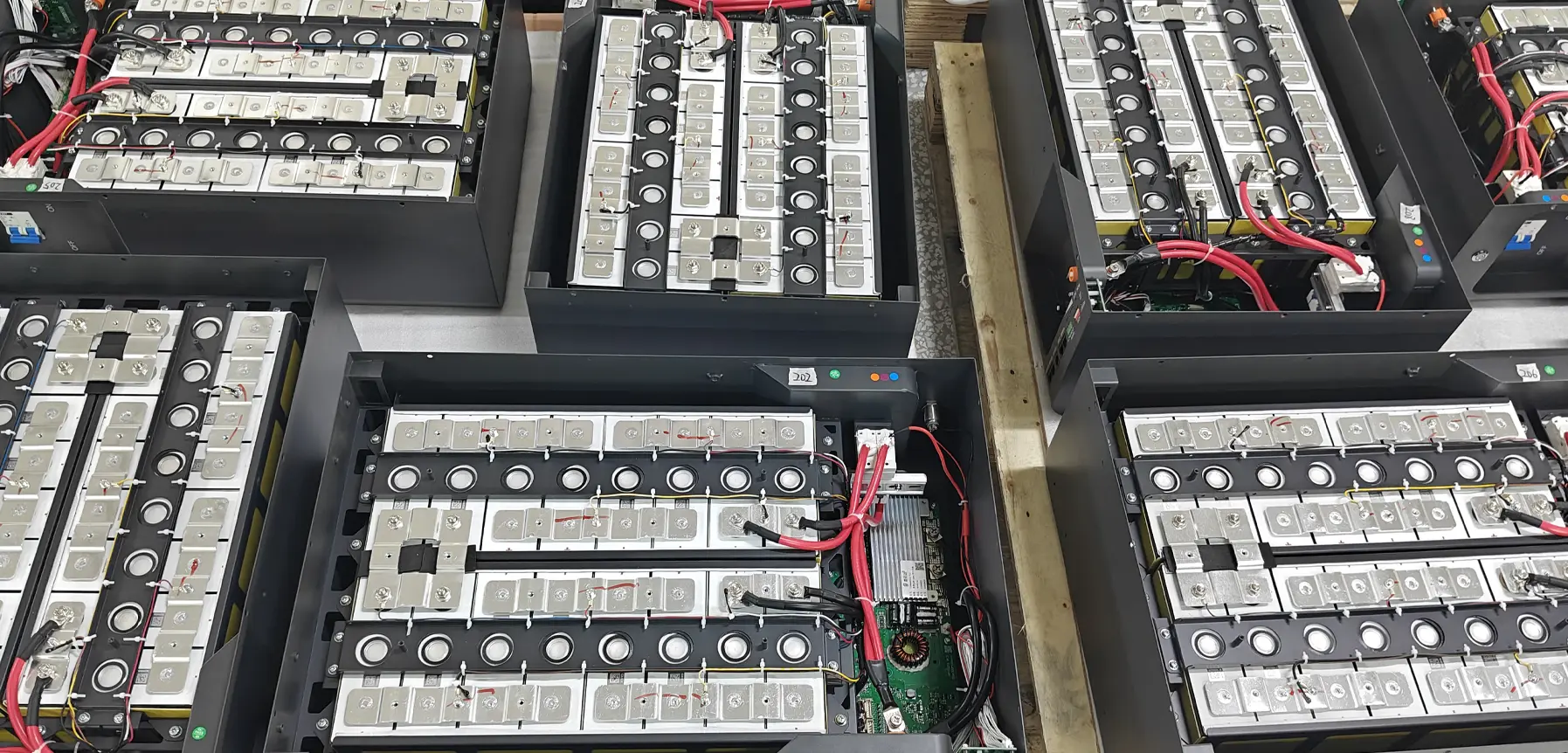
Our stacked systems already integrate battery management, thermal monitoring, and short-circuit protection. That means fewer risks and easier compliance for project partners.
Choosing Efficient Loads
Stretching a 5 kWh battery isn’t just about capacity; it’s about how you use it. High-efficiency loads multiply the impact:
- LED lights with motion sensors cut classroom lighting demand by 30–60%.
- Eco-mode projectors reduce power draw from 300 W to around 200 W.
- BLDC ceiling fans use a fraction of the energy of old induction models.
Design the system right, and suddenly a “small” 5 kWh feels much bigger.
Case in Practice: One Day’s Flow
Imagine a day in a rural school running a 5 kWh stack:
- 8:00 AM – Lights and router come on. Teachers power up laptops.
- 10:00 AM – Projector runs for lessons, drawing ~260 W.
- 12:00 PM – Midday sun charges panels, battery tops back up.
- 2:00 PM – Students rotate on laptops, draining ~1 kWh.
- 4:00 PM – Lights dim, lessons end, battery still holds ~20% reserve.
With good design, the system quietly sustains an entire school day—without fumes, noise, or costly fuel.
Why Stacked All-in-One Fits Rural Schools
- Scalable – Start with 5 kWh, expand as the school grows.
- Simple – Integrated inverter, BMS, and battery in one unit; minimal wiring.
- Durable – LiFePO4 chemistry delivers >6,000 cycles, translating to 10+ years of service.
- Accessible – Compact design fits in a small room or corner, no special facility needed.
See our full range: stacked all-in-one systems from 5 kWh to 25 kWh .
Obstacles and How to Overcome Them
- Upfront cost: Even at falling solar prices, a full system may exceed local school budgets. Partnerships with NGOs, micro-finance, or government grants are key.
- Maintenance: Local caretakers need training in basic checks—dusting panels, monitoring battery indicators, and ensuring ventilation.
- Weather variability: Seasonal cloud cover can cut output. Oversizing the solar array or adding a second stack ensures reliability.
Long-Term Payoffs
When schools get power, ripple effects spread fast:
- Longer study hours and evening classes.
- Access to e-learning and global resources.
- Ability to power printers, lab equipment, or even refrigeration for vaccines.
- Stronger community ties, as schools can double as local charging hubs.
A single 5 kWh stack may look modest, but in context it’s transformative.
Wrapping Up
Designing 5 kWh stacked all-in-one systems for rural schools isn’t theory—it’s a practical path to education access. The systems are compact, safe, and expandable. With solar panels, they cut costs compared to diesel and deliver reliable power where the grid won’t reach soon.
For schools, donors, or project developers ready to act, the next step is simple: choose proven equipment, size the system carefully, and think ahead about growth. If you’re exploring options, take a look at our 5 kWh stacked all-in-one solution —built for exactly these challenges.